Capabilities-banner-image

Every IIHL part is verified from raw metal to finished surface. Our quality system is built around ISO 9001, ISO 14001 and ISO 45001 and runs across every unit — so what we ship performs the same, batch after batch.

Spektro Material Composition Analysis

Before any metal goes into production, we check exactly what it’s made of using a Spektro analyser. It reads every element in the alloy — for example, the right mix of copper and zinc in brass, and that lead stays within safe limits. This makes sure the metal matches the grade the customer ordered. Catching a wrong material here saves problems with strength, finish, and rust later, so it’s our first check.
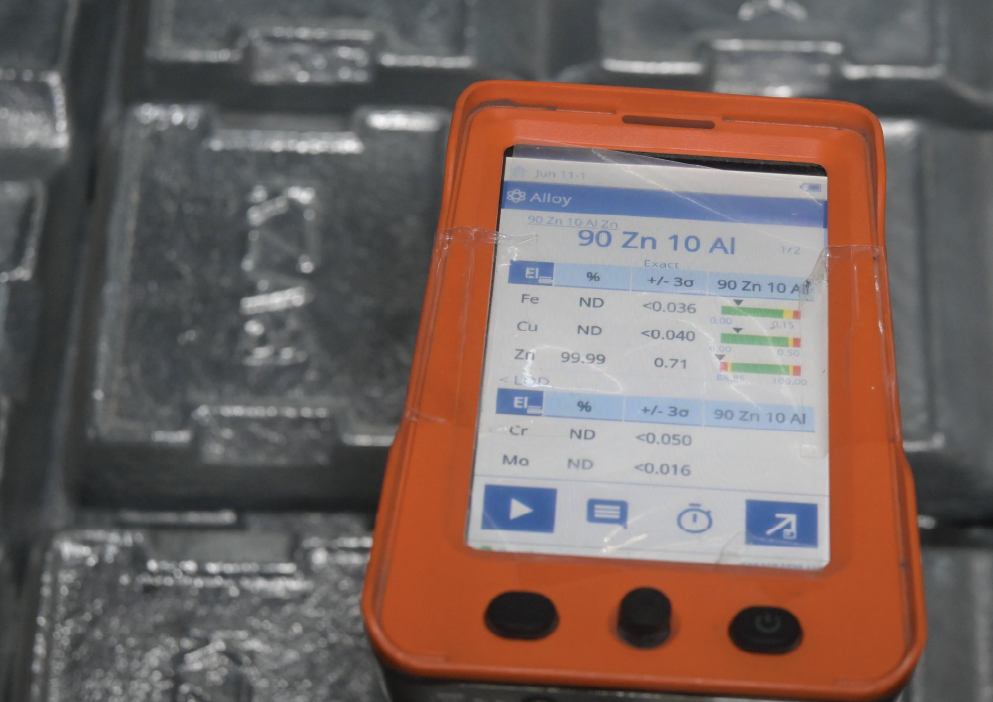
Spektro Material Composition Analysis

Wolff-Wilborn / Pencil Hardness

This test checks how well a finish resists scratches. Pencils from soft (6B) to hard (9H) are pushed across the surface, and the hardest one that leaves no mark gives the rating. It shows how the finish will cope with keys, rings, and everyday handling. For hardware that’s touched all day, this tells us how long it will keep looking new.

Wolff-Wilborn / Pencil Hardness

Color Matching Test

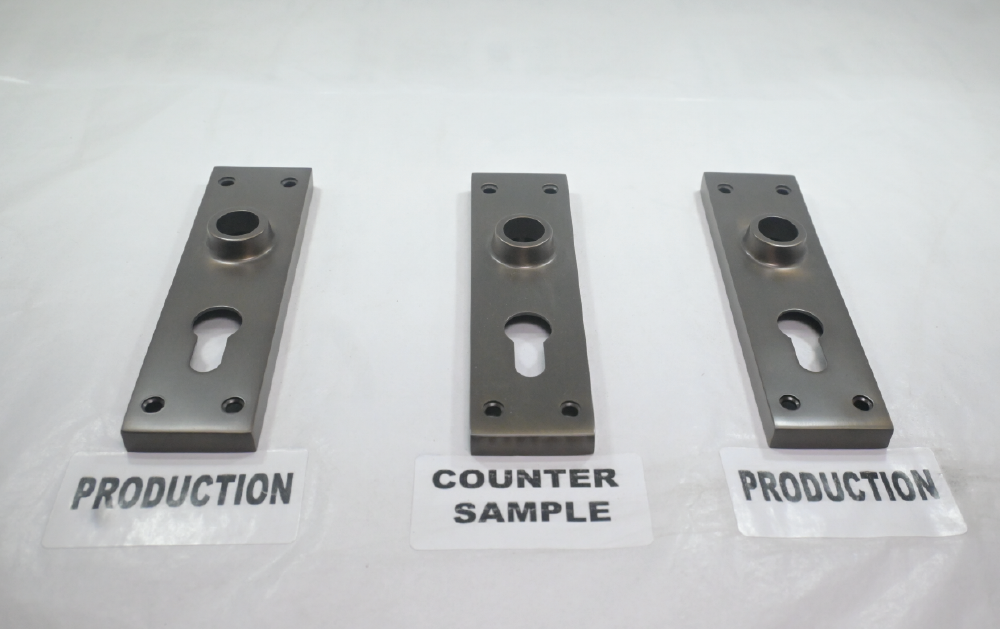
We compare every finished batch against an approved sample under proper, standard lighting. The same colour can look different under daylight, warm, or office light, so checking by eye in a normal room isn’t reliable. This makes sure handles, knobs, and accessories bought months apart still match on the door. For brands selling a full range, matching colour across orders really matters.

Color Matching Test

Cross-Cut Adhesion Test

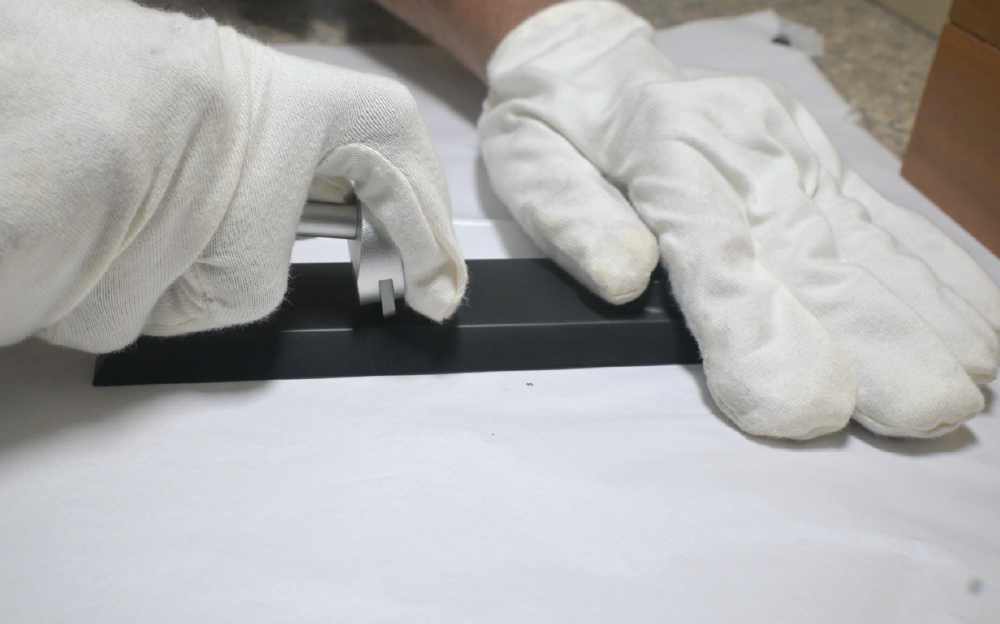
This checks how well a coating sticks to the metal underneath. We score a small grid through the finish, press tape over it, and pull it off — then see how much lifts. If nothing comes away, it passes; if it flakes, the finish would peel or chip later. It’s a quick, clear way to spot a finish that won’t last.

Cross-Cut Adhesion Test

Coating Thickness Test

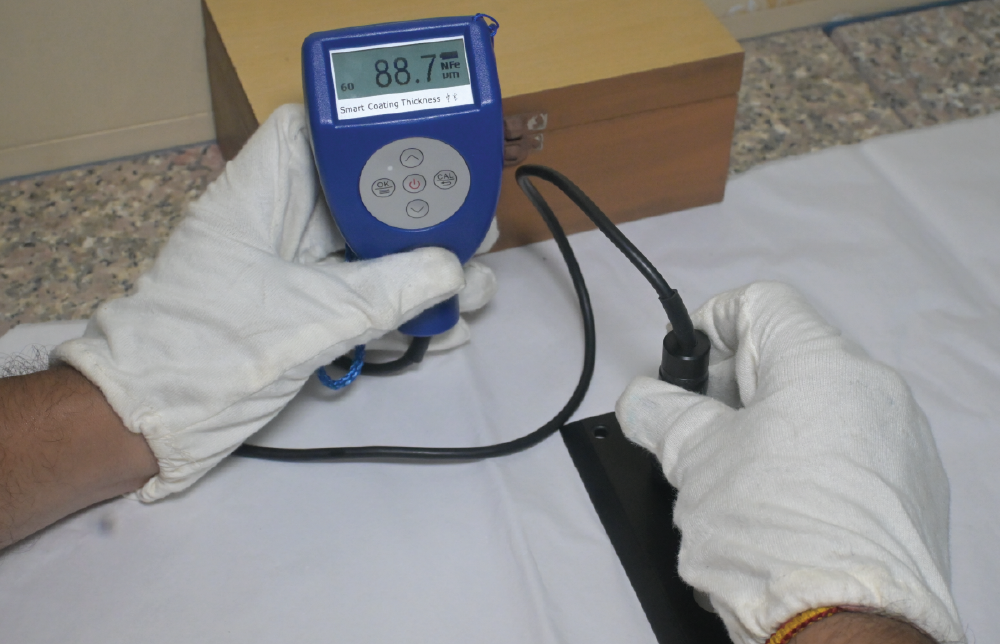
We measure how thick the plating or coating is on the finished part to make sure it meets the agreed spec. Too thin and the part won’t protect well or last; too thick and it can affect fit, finish, and cost. A gauge checks the thickness at several points so it’s even across the whole surface, not just in one spot. Getting this right means the finish performs the way the customer expects and stays consistent from batch to batch.

Coating Thickness Test

Salt Spray Test (ASTM B117)

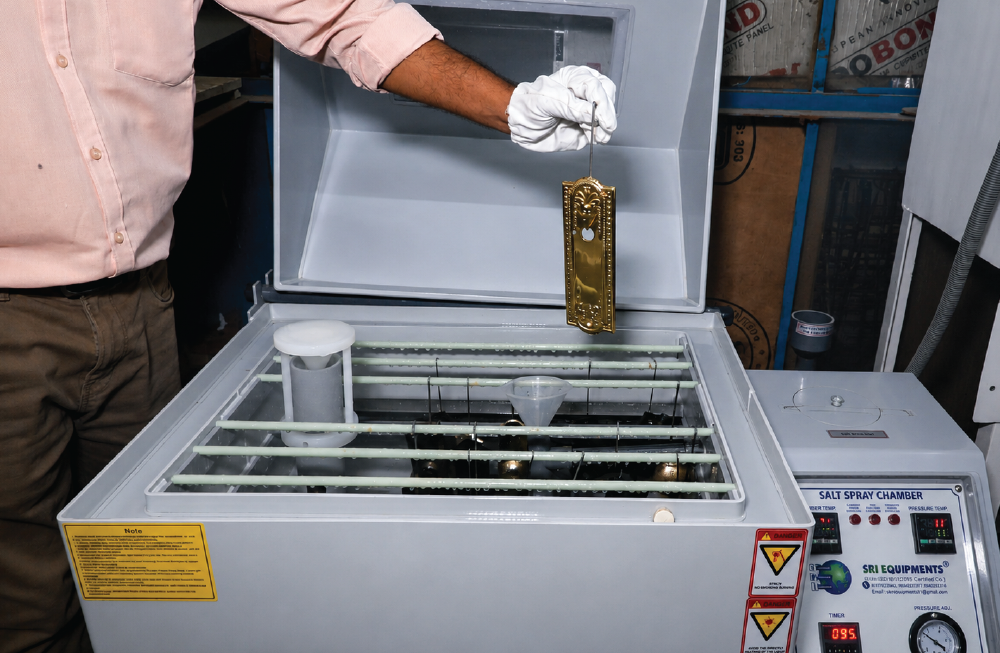
This shows how well a part resists rust by speeding up years of weather in a sealed chamber. Parts sit inside a fine salt mist for a set number of hours, copying coastal air and humidity. The longer they go before the first signs of rust, the better they’ll hold up outdoors. It follows the international ASTM B117 standard, so buyers get a fair, comparable result.

Salt Spray Test (ASTM B117)